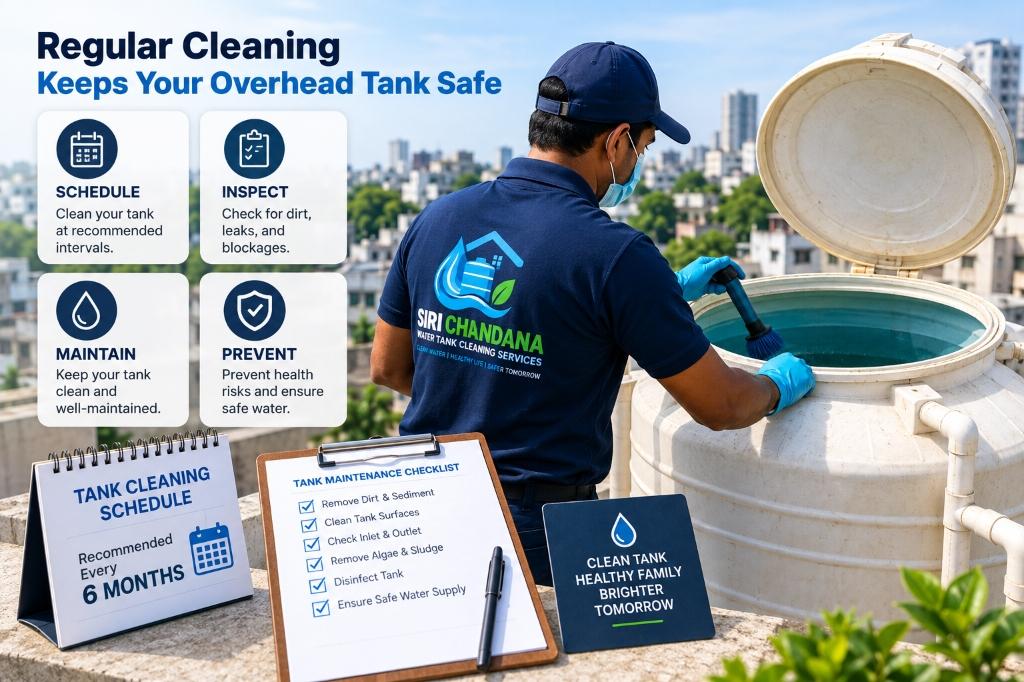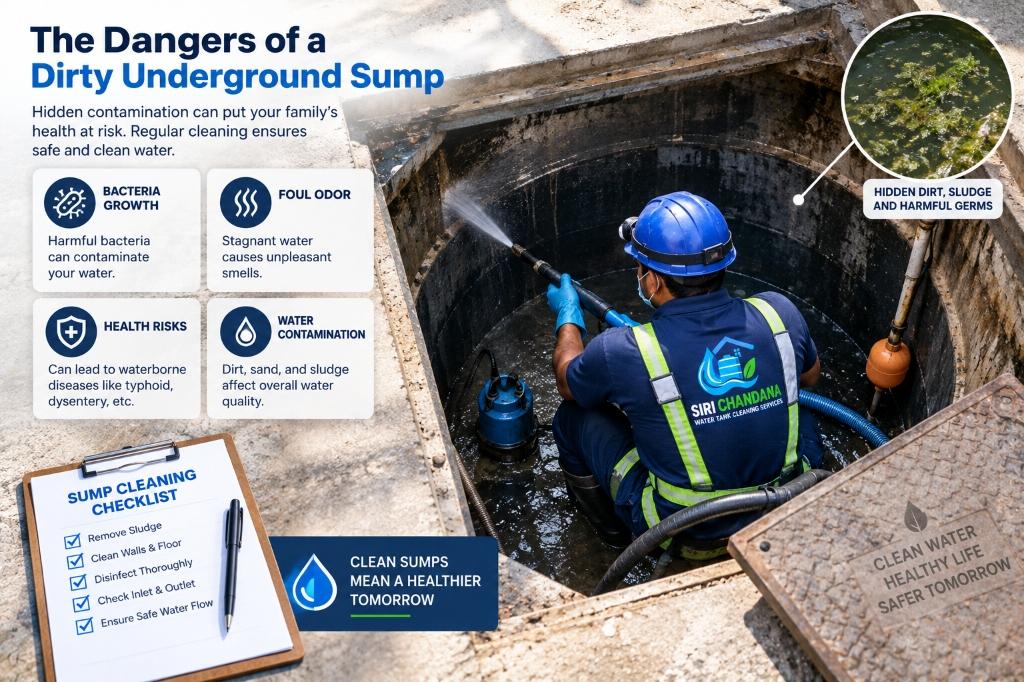
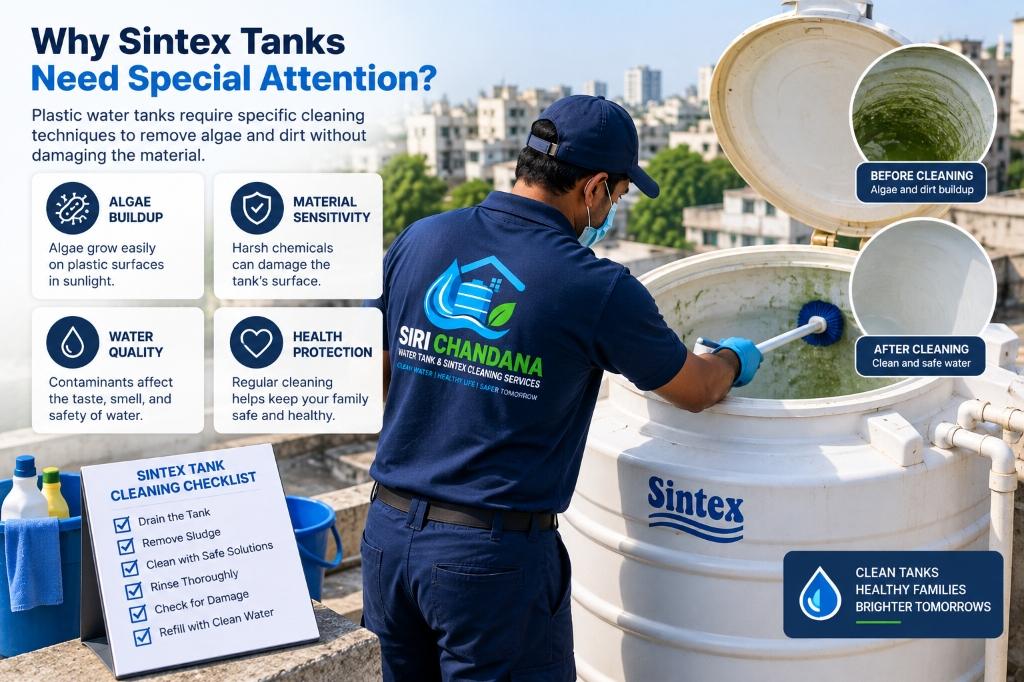
Sintex and other plastic water tanks are incredibly popular in Hyderabad due to their durability, lightweight nature, and affordability. However, cleaning them requires a highly specific approach compared to traditional concrete or cement tanks. Using the wrong techniques can permanently damage your investment.
The Algae Problem in Plastic Tanks Because many plastic tanks are exposed to direct sunlight on rooftops, they are highly susceptible to algae blooms. Even a small amount of light penetrating the plastic (especially in lighter-colored tanks) can trigger rapid algae growth. This algae gives water a swampy taste and smell, and creates a slippery biofilm on the inner walls.
The Danger of Abrasive Cleaning It is a common mistake to use harsh, abrasive wire brushes or steel wool on plastic tanks. Abrasive scrubbing creates micro-scratches and grooves in the plastic interior. While the tank might look clean initially, these microscopic scratches actually give algae and bacteria a textured surface to cling to in the future, making the problem exponentially worse over time.
Furthermore, using harsh chemical bleach can degrade the plastic polymer, reducing the lifespan of the tank and causing it to become brittle and crack under the hot Indian sun.
Safe Cleaning Techniques for Sintex Tanks At Siri Chandana, we understand the material science behind plastic tanks:
- Soft-Bristle Mechanized Brushes: We use specialized brushes that remove biofilm without scratching the surface.
- High-Pressure Jets: We rely on water pressure rather than physical abrasion to dislodge dirt and algae.
- Non-Abrasive Disinfectants: We use eco-friendly, food-safe cleaning agents that sanitize the water without degrading the plastic walls.
- Vacuum Sludge Removal: We safely extract the heavy sediment from the bottom without scraping the floor.
Protect your health and your investment. Let our trained professionals handle your plastic water tanks with the care they require.